

Georgia Aquarium leads in water reuse by recycling 99% of exhibit water
Georgia Aquarium operates a closed-loop water system in a landlocked city, requiring advanced treatment to protect marine life and manage artificial seawater use. Partnering with Xylem, the aquarium uses Neptune Benson filtration and denitrification technologies to remove nitrates, recycle 99% of exhibit water and support public awareness of sustainable water management.
At the heart of Atlanta, Georgia Aquarium is a global leader in marine conservation, recycling 99% of its 12 million gallons of exhibit water daily. In partnership with Xylem, the aquarium uses advanced filtration technologies to maximize efficiency, reduce waste, and set a new standard for water reuse.
Georgia Aquarium, the largest aquarium in the Western Hemisphere, is a world leader in aquatic research, animal care and conservation, studying and tending to over 500 species to develop new standards of care and veterinary practices. Among its premier exhibits is the 6.3-million-gallon Ocean Voyager gallery, one of the largest indoor aquatic habitats in the world. The one-of-a-kind immersion experience allows visitors to dive alongside whale sharks, stingrays and thousands of marine creatures.
Addressing water management challenges in a landlocked city
Most aquariums are located near a coast, allowing them to discharge their used water into the ocean and get fresh replacement water back. Instead, Georgia Aquarium, based in Atlanta, more than 300 miles away from the ocean, must clean, remove waste and treat exhibit water to standards in a closed loop.
When originally envisioning and building the facility nearly two decades ago, the aquarium knew it needed world-class water filtration to help ensure a continuous supply of clean water for its marine life.
Saving water was key for the institution, as producing artificial seawater is expensive at 14 cents a gallon. Georgia Aquarium’s commitment to sustainability also required a filtration solution that would enable and facilitate water reuse – one of the Aquarium’s key sustainability goals. The Aquarium partnered with Xylem, deploying its Neptune Benson water filtration solutions.
Customized solution to remove nitrates
Working together, Georgia Aquarium’s life support systems (LSS) team developed an innovative denitrification process using fiberglass-reinforced plastic sand filter vessels, custom-built by Neptune Benson. The filters were specifically designed to remove nitrates and establish a healthy balance of bacteria.
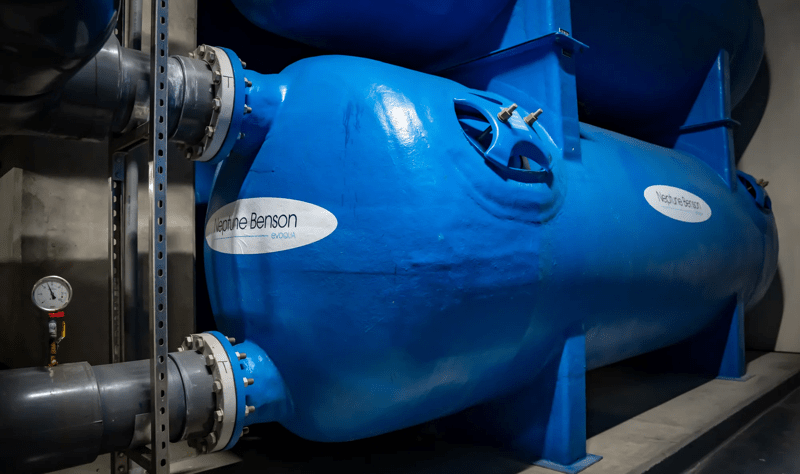
Xylem supplied almost 200 sand filters in all which continuously recirculate 10 million gallons of artificial seawater to facilitate the reuse of most water at the facility and reduce water consumption.
Achieving sustainability goals by recycling 99% of exhibit water
The Aquarium’s innovative water filtration system has successfully delivered on the institution’s nitrate removal and water quality goals. In addition, by leveraging reuse, Georgia Aquarium is avoiding the need to dispose of and replace vast quantities of used water. This saves the institution millions of dollars and reduces water consumption, while leading the industry in water quality and clarity.
Due to the high cost of producing artificial seawater and the amount of water used, the filtration systems have the potential to save Georgia Aquarium nearly $1.5 million annually by reusing more than 99% of the 10 million gallons of water across seven major galleries.
Shared mission for sustainability
Xylem and the Georgia Aquarium are both committed to a more water-secure future. Both organizations partner to raise awareness of the importance of water quality for marine animals. Last year, Xylem launched an interactive water quality game at the facility that lets visitors repair a virtual exhibit by building a proper filtration system to achieve optimal water quality – protecting whale sharks, manta rays and other marine life.
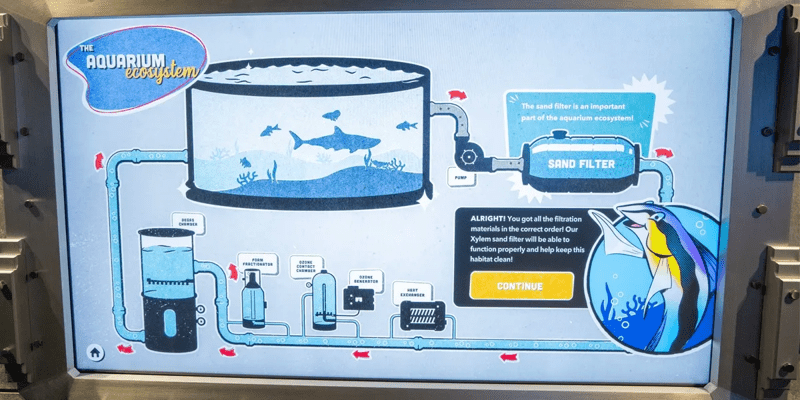
Through Xylem's Watermark program, the partnership also supports local cleanups and education efforts, because sustainability goes beyond the aquarium walls. When Masson describes these efforts, he states, "We're not just conserving water; we're shaping a better future for generations to come."
Advancing water reuse for resilience
Operating a large, closed-loop aquatic habitat requires efficient water treatment to protect marine life while minimizing resource use. Through advanced filtration and reuse, Xylem supports high water recycling rates that conserve water and reduce environmental impact. By ensuring reliable systems and engaging the public on water stewardship, this approach helps build resilient communities that depend on sustainable water practices.