

UV water treatment in modern fish farming: what really matters
Clean water – upstream and downstream – is a critical element of safe, productive, and sustainable aquaculture. Ultraviolet (UV) treatment systems are an increasingly popular solution for aquaculture businesses, but efficient and accurate deployment depends on selecting the right system and the correct dosage. Asbjørn Husby, Senior Engineer Aquaculture & Water Treatment at Xylem, discusses the selection process for UV treatment systems and the key things for aquaculture operators to look out for.
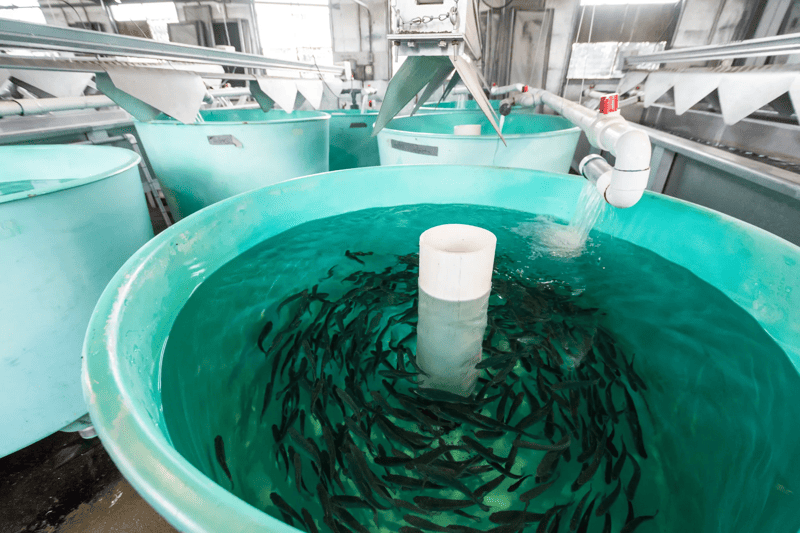
One of the most common requests when talking with aquaculture businesses is for more information and education around UV disinfection systems. While UV is well established in municipal and industrial water and wastewater treatment, it is rising in use in modern aquaculture. This aligns with the increase in land-based recirculating aquaculture systems (RAS), as well as sea-based semi-closed and closed systems.
Fundamentally, biosecurity to prevent the introduction of pathogens and minimise the potential impact in recipient water is a vital area of interest for aquaculture, and commissioning a high-performance, efficient, and sustainable UV treatment system can be a game-changer.
Understanding UV
UV treatment is a reliable and efficient water disinfection used in aquaculture to reduce pathogen loads while preserving water quality. This sustainable, chemical-free treatment technology disinfects water without generating harmful by-products.
For a UV system to be effective, it must be properly sized and deliver the correct UV dose at the appropriate flow and water quality. Unless you are replacing a system like for like or have extensive experience in UV selection and operation, knowing exactly what you need can be challenging. One of the simplest ways around this is to work with an expert partner who can help identify the right system for your operation.
Another key thing to bear in mind is proven performance. Can the UV system you’re buying deliver what you need? This is where third-party validation comes in. While it is not a universal requirement, in certain areas it is required or expected.
For example, when RAS facilities are seeking permits, certification, or investor assurance. Third-party validation matters because it confirms the actual delivered UV dose and accounts for real hydraulic behaviour. This not only gives operators the confidence their system will perform, but it reduces biosecurity risks. Without it, this means the system has been dose-rated by the manufacturer without formal external validation. In this case, it can leave operators open to installing systems that over or underdose and, ultimately, one that isn’t capable of the job in hand.
At Xylem third-party validation, backed by our extensive R&D, is central to our business. This includes our ongoing research in Norway, where we determine UV sensitivities for emerging pathogens, alongside our extensive data on UV sensitivities for established fish pathogens. Using this database, we can design a UV treatment system that targets the pathogens of concern for a specific site, not just working from generalisations, but a tailored solution.
Applications in aquaculture
Whether it is a semi-closed or closed system, intake water for RAS or a processing plant, UV is a versatile solution for aquaculture water treatment. Because of the complex nature of validation, dosing, and pathogen targeting, developing a balanced solution to deliver effective treatment while maximising energy efficiency and cost effectiveness requires significant expertise.
We offer a wide range of UV systems and are not restricted to one technology type. What this means is we can look objectively at the needs of the treatment set-up and recommend the right UV system to deliver. While many of our clients are initially focused on reducing system footprint and power consumption, other critical considerations may supersede these factors, such as effective treatment (dosing) and reliability. Like many processes, it is about finding the right balance of priorities while achieving fundamental objectives.
Proven solutions
For aquaculture businesses, Xylem offers a large portfolio of advanced UV technologies, such as the Wedeco UV disinfection systems. These provide well-proven, chemical-free pathogen control (like ISA, SAV, PRV and Pasteurella) in recirculating systems, well boats, and hatcheries. Whether operating in corrosive saltwater or harsh conditions, these systems are robust and reliable – backed by decades of experience.
Utilising energy-efficient lamps and smart controls (such as OptiDose), a UV system will enhance fish health and improve site productivity by destroying bacteria and viruses without harming water quality. Better still, user-friendly controllers make our systems easy to operate, while maintenance is made simple.
Your next UV system
If you are considering a UV treatment system, whether to enhance treatment efficiency, reliability or biosecurity, the right partnership can make all the difference. Prioritise a technology partner based on world-leading expertise, exceptional hardware, and close support. Our engineers will be able to help you stay informed and provide invaluable guidance in your assessment of potential solutions.