

The innovation that’s driving aquaculture sustainability
Asbjørn Husby, Senior Engineer Aquaculture & Water Treatment
Taste remains one of the most persistent and costly quality challenges in aquaculture. Naturally occurring compounds such as geosmin and 2-methylisoborneol (MIB) are two of the leading causes of poor flavour. As producers increasingly adopt more efficient production models, taking control of these compounds is vital. Asbjørn Husby, Senior Engineer Aquaculture & Water Treatment at Xylem, explores how advanced water treatment technologies are a critical tool for prevention, helping aquaculture operators manage quality, costs and sustainability.
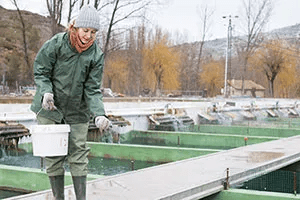
Geosmin and MIB are naturally occurring organic compounds produced by microorganisms commonly found in aquaculture ponds and recirculating aquaculture systems (RAS). Even at extremely low concentrations, once these compounds have been absorbed, it can lead to fish containing undesirable flavours, such as earthy or musty tastes, which are easily noticed by consumers. Although there’s no risk from Geosmin and MIB when it comes to food safety, their presence can make otherwise healthy, market-ready fish commercially unviable – causing significant economic losses for producers.
Geosmin and MIB are notoriously hard to control at source. One of the ways operators therefore have to eliminate these tastes is depuration, or clean water purging, days / weeks before harvest. As well as increasing farming and labour costs, this process also increases the risk of losing stock. It’s easy to see how purging results in one of the biggest financial losses in aquaculture.
Another method to remove poor tastes is water exchange but this isn’t feasible in closed systems, which are gaining in popularity across the globe as sustainability and disease control pressures mount. With RAS, water is continuously filtered and reused with minimal to zero exchange with the outside – recycling as much as 99.9% of the water. In these systems fish are often more vulnerable to off-flavours because compounds can easily accumulate in reused water and standard filtration typically doesn’t remove Geosmin and MIB well.
The reality is, methods to remove the tastes caused by Geosmin and MIB from fish have their limitations. They are time and energy consuming and with strict operational and environmental targets to meet, operators need a more sustainable solution.
A sustainable way forward
Today, advanced water treatment is at the centre of a proactive, sustainable and commercially viable solution to the effects of Geosmin and MIB. At Xylem we continue to invest in research and development to find the most effective technology for the unique demands of aquaculture environments. As well as helping ensure operators can thrive, sustainability is at the heart of our innovation. Ultimately, the right solution will significantly cut carbon and costs, enabling farmers to get harvests up to market size solely on land, in the most safe and efficient way.
One of the ways to do this is using the power of ozone or AOP technology. Ozone is one of the most powerful commercially available oxidising and disinfecting agents. Geosmin and MIB are primarily produced by Cyanobacteria (blue-green algae) an Actinomycetes in sediments and biofilms – so they’re not just a problem for aquaculture. Globally ozone is being used successfully against Geosmin and MIB in drinking water applications and we believe it has great potential for use in aquaculture. Ozone can chemically degrade Geosmin and MIB molecules, transforming them into smaller, less odorous compounds.
With an AOP – Advanced Oxidation Process – ozone is combined with another energy source or catalyst to increase its power and effectiveness. Typically, this is hydrogen peroxide or ultraviolet (UV) light. These combinations are far more reactive than ozone alone and highly effective at breaking down Geosmin and MIB. Importantly, ozone or AOP is a preventative, not just corrective measure, allowing operators to take control of water quality.
Innovation in advanced water treatment is the future of a thriving aquaculture industry and ozone and AOP is just one example of this. It’s the key to high water quality and healthy stock and, importantly, cost savings and sustainability gains. Through working in close partnership with operators and continued investment in technology research and development, we’re proud to be at the centre of change.